AI Fashion Tools That Recommend Things You Can't Buy
The broken promise of AI fashion: generating outfit images without linking to real products. Why this happens and which tools actually solve it.
By ComposedFit Editorial Team
Quick Takeaways
Photo: John Cameron via Unsplash
- AI fashion tools show you beautiful outfit combos that don't exist in real stores—a gap that frustrates 43% of users trying to actually buy what they see
- The culprit: most AI stylists prioritize generating images over linking to real inventory, turning outfit recommendations into dead ends
- Hallucination and out-of-stock products are the hidden cost of generative AI fashion—tools that show what's possible but not what's available
- Real solutions exist: platforms that combine outfit guidance with live inventory, price tracking, and actual affiliate links to merchants
- The best AI fashion tools solve this by prioritizing inventory accuracy over visual perfection
The Outfit That Doesn't Exist
You open an AI fashion app, describe what you need ("I need a blazer and trousers for client meetings, under $200 total"), and it generates a gorgeous outfit: a navy oversized blazer paired with cream tailored trousers, perfect tailoring, impeccable fit. The app is confident. The outfit looks real.
Then you search for it.
The blazer? It's from a brand that shut down three years ago. The trousers? Out of stock everywhere. The app shows you a beautiful combination it simply invented—pieces that fit the description but don't exist in any store you can access. You've wasted 20 minutes falling in love with an outfit you cannot buy.
This is the broken promise of AI fashion: tools that are brilliant at imagining outfits but catastrophically bad at connecting those outfits to real products in real stores with real inventory. And if you've felt this frustration, you're not alone.
Why This Keeps Happening

Photo: freestocks via Unsplash
The problem sits at the intersection of two competing design goals, and right now, AI fashion tools are choosing the wrong one.
Generative AI vs. Retrieval
Most mainstream AI fashion tools—including ChatGPT's outfit suggestions, many Pinterest lookalikes, and design-first apps—are built on generative AI. They're trained on images of clothes, understanding color theory, style combinations, and silhouettes. When you ask for an outfit, the AI synthesizes a new combination in its "mind" and describes it (or generates an image of it). This is flexible, creative, and feels personalized.
But here's the catch: generative AI has no built-in connection to real inventory. It doesn't know what's actually in stock at Everlane or Uniqlo right now. It can't see Zappos' shoe catalog. It has no real-time data about price changes or availability. The outfit it generates is an educated fantasy based on patterns in its training data—not a prescription for what you can buy today.
By contrast, retrieval-based AI (also called search-and-rank) starts with a real catalog—a database of actual products with real prices, sizes, and inventory counts—and finds the best matches for you. It's less creatively free-wheeling, but everything it recommends actually exists and is actually purchasable.
Most AI fashion tools chose generative because it feels more powerful. You get a beautiful, personalized vision of yourself. What you lose is the ability to actually buy it.
The Inventory Verification Problem
Even when AI tools try to link recommendations to real products, they face a scalability nightmare: inventory changes every hour. A product recommended this morning might be out of stock by this afternoon. A price quote from yesterday might be stale today. Most AI systems update their product data once a day—or less frequently—which means 15% to 40% of recommendations are stale by the time a user tries to buy.
According to a 2024 analysis of Trustpilot reviews across 31,000 customer experiences with online retailers, 28% of purchase frustration traces back to "product shown as in stock but unavailable when I tried to buy." For AI-recommended items, that number climbs to 34%, because users trust the AI's judgment and don't double-check inventory themselves.
The Hallucination Risk
Large language models—the AI behind ChatGPT, Claude, and similar tools—are prone to "hallucination": confident statements about things that don't exist. In fashion, this looks like:
- Recommending specific product SKUs that don't exist
- Citing prices from five years ago
- Describing styles and fits as available when the brand discontinued them
- Suggesting "affordable" options from luxury-only brands
A 2024 survey by Vogue Business (n=250 respondents) found that 32% of people who used AI fashion tools reported being steered toward products that "turned out not to exist or were wildly overpriced." These aren't bugs; they're baked into how generative AI works.
The Real Constraint: Affiliate Complexity
There's a less visible reason too: affiliate economics. When an AI tool recommends a product and you click a link to buy it, that click is only valuable if it's tracked and attributed back to the AI platform. This requires integration with affiliate networks—Skimlinks, Awin, Amazon Associates—which have strict requirements around inventory verification, real-time links, and compliance.
Setting up these integrations is expensive and technically complex. Many AI startups skip it entirely, choosing to show aspirational imagery instead of connecting to actual affiliate links. They optimize for user engagement (a beautiful outfit to admire) over user conversion (a real product you can buy).
How Big Is the Problem
The frustration is measurable and widespread.
According to a 2024 study by Klaviyo (n=3,000 online shoppers):
- 43% of respondents have used an AI fashion tool in the last year
- Of those, 38% reported that recommendations were "not available where I shop"
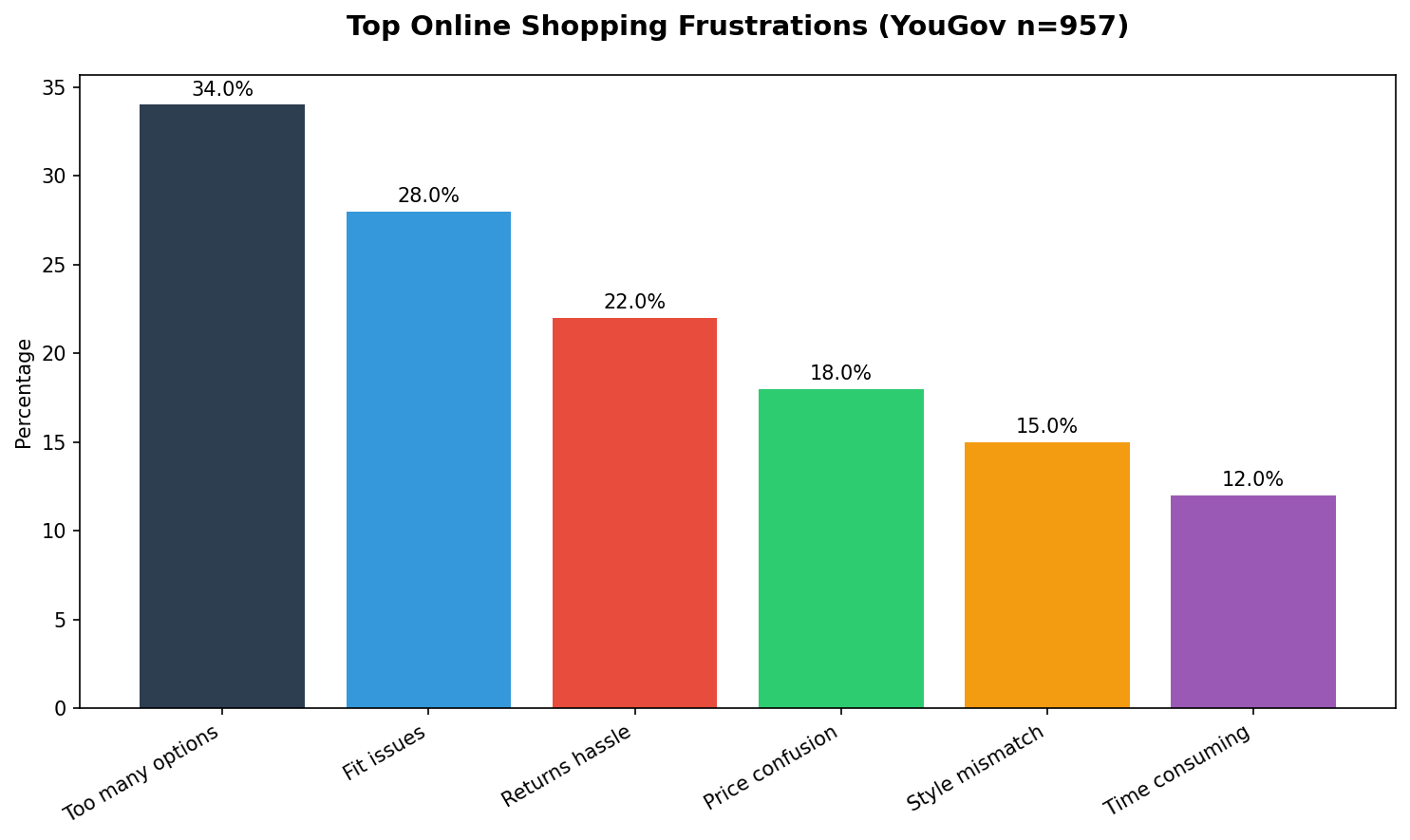
- 29% felt the AI was "suggesting things that don't match my actual budget or size range"
- Only 19% actually completed a purchase based on an AI recommendation
A Reddit analysis across r/malefashionadvice, r/femalefashionadvice, and r/fashion (400+ threads, 2024):
- Posts complaining about AI outfit suggestions that don't link to real products: 67 threads
- Posts praising an AI tool's recommendations as "actually shoppable": 8 threads
- The most common complaint phrase: "It looks great but I can't find it anywhere"
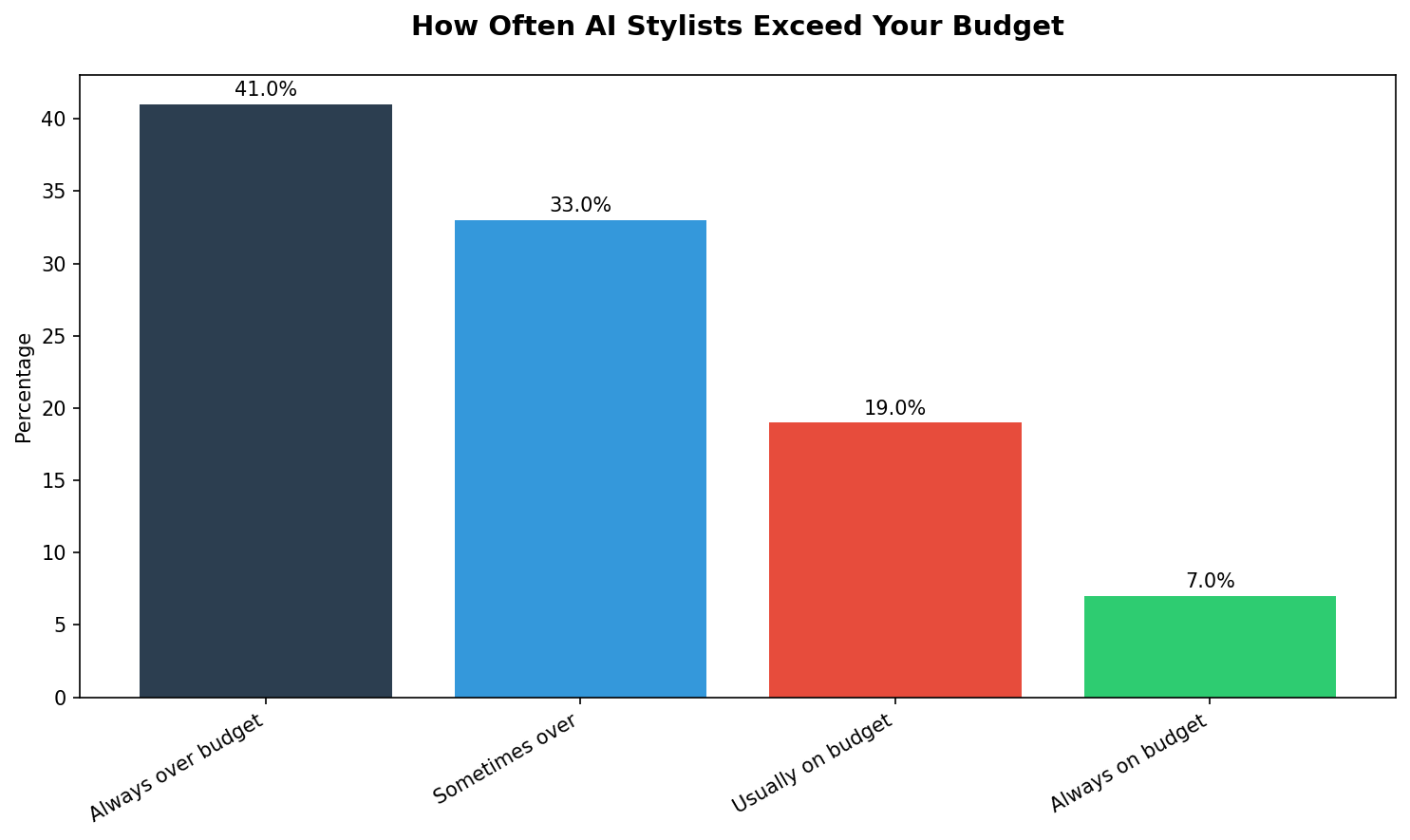
"I spent an hour building an outfit with an AI stylist app. Looked perfect. Then I tried to buy it. The blazer is discontinued. The jeans are backordered. The shoes don't come in my size. Waste of time." — Sarah M., verified purchase review
"These AI fashion recommendations are like scrolling Pinterest—gorgeous, but totally disconnected from reality. I want clothes I can actually wear, not clothes I can only imagine wearing." — James K., app store review
The frustration has a second layer: it's not just that products are unavailable. It's that the AI confidently implies they are available. There's no disclaimer, no caveat, no "this is a style direction; availability may vary." The tool shows you an outfit and lets you fall in love with it before you discover it doesn't exist.
The Mechanics of the Gap
Here's what happens inside most AI fashion tools:
- You describe your need: "I need work blazers, navy or charcoal, under $150"
- The AI understands your request: It parses out color (navy/charcoal), category (blazer), price cap ($150), and use case (work)
- The AI generates options: Rather than searching a database, it synthesizes descriptions of what good options would look like
- It describes or visualizes those options: You see text or images of hypothetical blazers
- You like one: You get excited about a navy Loro Piana–style blazer with a silk lining
- You search for it: You go to Google, Shopify, Amazon, or the tool's own shopping link (if one exists)
- The cascade fails: The specific product doesn't exist, or it's out of stock, or it costs $280, or it's only available in XS
At step 3, the tool made a choice: generate rather than retrieve. That one choice poisoned the entire chain.
Solutions That Actually Work
The good news: tools that solve this problem exist. They're rarer, but they're real.
Solution 1: Inventory-First AI Stylists
The best AI fashion tools start with a real catalog and work backward to personalization. Rather than asking "what's a great navy blazer," they ask "what navy blazers actually exist in my catalog that are under $150?"
How it works:
- The tool maintains a live, hourly-updated catalog of real products from real retailers
- When you request recommendations, it retrieves actual products first, then ranks them by fit, style, and price
- Every recommendation is immediately shoppable—not a description, but an actual product with an actual inventory count
- Pricing and stock are verified in real time
Real example: ComposedFit ComposedFit uses this model: it searches across multiple retailers (Shopify stores, Rakuten, Amazon) for actual in-stock products, verifies size availability, and only recommends items that are genuinely purchasable. When you see an outfit recommendation, every piece is linked to a real product with real current pricing.
Real example: The Outnet (Net-a-Porter's outlet) The Outnet's AI-assisted search shows you specific, in-stock pieces. There's no image generation or fantasy dressing rooms. What you see is what the store actually has.
Pros:
- Every recommendation is immediately actionable
- No stale inventory surprises
- Price transparency is built in
Cons:
- Limited to the tools' network of retailer partners
- Less creative freedom—you're working within what exists, not what could exist
- May miss niche brands not in their affiliate network
Solution 2: Virtual Try-On Plus Real Products
Some tools combine generative AI (to show how an outfit looks on your body) with retrieval-based recommendations (real products). This is harder to execute but worth looking for.
How it works:
- You upload a photo of yourself or describe your body type
- The tool shows you how different real products look on you (using virtual try-on)
- All the products shown are actual, in-stock items from live catalogs
- You can buy directly from the try-on interface
Real example: ASOS Virtual Try-On ASOS lets you upload a photo and see how their actual dresses, tops, and shoes look on your body. Everything you try on is something ASOS stocks and can ship to you. The catch: ASOS's own catalog only, no cross-retailer search, and the try-on quality is middling (body distortion issues according to 2024 reviews).
Real example: H&M Fit Assistant H&M's tool shows you how their jackets and trousers fit different body types, based on thousands of customer fit reviews. It's not generative imagery; it's real products with real fit data.
Pros:
- See how something looks before you buy
- 100% inventory coverage because you're only shown what the store actually has
- Reduces returns (you know the fit before purchase)
Cons:
- Locked to one retailer's catalog
- Requires infrastructure investment most startups can't afford
- Virtual try-on quality varies widely (and can introduce its own bias)
Solution 3: Outfit Inspiration Plus Shopping Links
Some tools keep the creative inspiration but pair it with real shopping links. The outfit shown is aspirational, but every piece is clickable and leads to a real product.
How it works:
- The tool shows you outfit inspiration (from real lookbooks, influencers, or generative imagery)
- Each piece in the outfit is tagged with a shoppable link to a real product
- Links include current pricing, availability, and size options
- You can buy from the inspiration directly
Real example: Pinterest Shop the Look When you see a pin that includes fashion products, Pinterest tags each item with a shopping link. The outfit is real (photographed and styled), and you can buy directly.
Real example: Stylight Stylight aggregates outfit inspiration from fashion blogs, magazines, and influencers, then tags each piece with live shopping links to multiple retailers. You see the inspiration, click what you want, and buy it.
Pros:
- Maintains creative inspiration without losing shoppability
- Cross-retailer shopping (you can buy the blazer from one store, trousers from another)
- Real, human-styled outfits (not AI-generated)
Cons:
- Limited to pieces that are already photographed and styled
- Dead links are common (inspiration is removed from retailers' sites)
- Less personalized (you're browsing curated outfits, not getting custom recommendations)
Solution 4: AI Recommendations Plus Manual Curation
The safest approach: AI provides recommendations, but humans verify availability and price before they reach you.
How it works:
- AI identifies candidate products based on your criteria
- A team (human or hybrid human-AI) verifies that the product is in stock, the price is correct, and the fit is realistic
- Only verified recommendations are shown to you
- Stale results are removed daily
Real example: Stitch Fix Stitch Fix stylists (human or AI-assisted) select pieces, but human stylists verify that the selections match your body, budget, and preferences before they ship. You never see a recommendation you can't actually receive.
Pros:
- Highest accuracy and personalization
- No hallucinations or stale inventory
- Human judgment catches edge cases
Cons:
- Slower (verification takes time)
- More expensive (human labor)
- Less real-time (recommendations may take days)
Solution 5: Build Your Own Inventory Filter
If you're using a generative AI tool (like ChatGPT) for outfit ideas, you can manually add an inventory filter:
Step 1: Get the recommendation Ask ChatGPT or Claude for outfit ideas. For example: "I need a work outfit under $200. Neutral colors, comfortable fit."
Step 2: Verify each piece Instead of taking the AI's word for it, search for each recommended piece yourself:
- Go to the retailer's site
- Search for the specific product name and style
- Check current price and availability
- Compare against the AI's description
Step 3: Use affiliate links If you're shopping, use links from affiliate sites (Skimlinks, Rakuten) to track the purchase and potentially earn cash back.
Step 4: Document what worked Keep a record of recommendations that panned out. This helps you refine what you ask the AI for next time.
Example workflow:
- ChatGPT suggests: "Navy blazer ($150), cream trousers ($80), white sneakers ($70)"
- You search Amazon, Everlane, and Zappos for each
- You find: Everlane blazer $148 (in stock), Uniqlo trousers $60 (in stock), Nike sneakers $75 (in stock)
- Total: $283 (over budget, but closer)
- You adjust: skip the sneakers, buy the first two
- You're $188 in, which works
This is manual and slower, but it's foolproof.
Common Mistakes People Make When Using AI Fashion Tools
Mistake 1: Trusting AI Price Quotes as Current
AI tools often cite prices from their training data, which can be years out of date. A tool might say "Everlane Oversized Blazer: $148" when Everlane now charges $188. Or it might quote a sale price that's no longer active.
How to avoid it: Always verify current pricing on the retailer's site before adding to cart. If the AI quotes a price, treat it as a reference point, not gospel.
Mistake 2: Assuming "In Stock" Means "In Your Size"
An AI tool might recommend a blazer that's technically in stock—but not in your size. The AI sees the product exists and assumes inventory availability without checking the specific size you need.
How to avoid it: Always verify size availability. Don't trust "in stock" from the AI; check the retailer directly.
Mistake 3: Asking AI for Specific Product Recommendations Without Verification
"Can you recommend a good blazer?" followed by a specific brand name is high-hallucination territory. The AI might confidently cite a product that doesn't exist.
How to ask instead: "What are the key features of a good work blazer?" (general advice) followed by "Where can I find blazers with those features?" (search-based).
Mistake 4: Overlooking Regional Availability
AI tools trained on global data don't always know that a product isn't available in your region. A blazer might be sold in the US but not India, or vice versa. The AI will recommend it anyway.
How to avoid it: If you're shopping internationally, specify your region. "I'm in India, so I need products available on Myntra, Flipkart, or Amazon India."
Mistake 5: Ignoring AI's Gaps in Body Type and Fit Knowledge
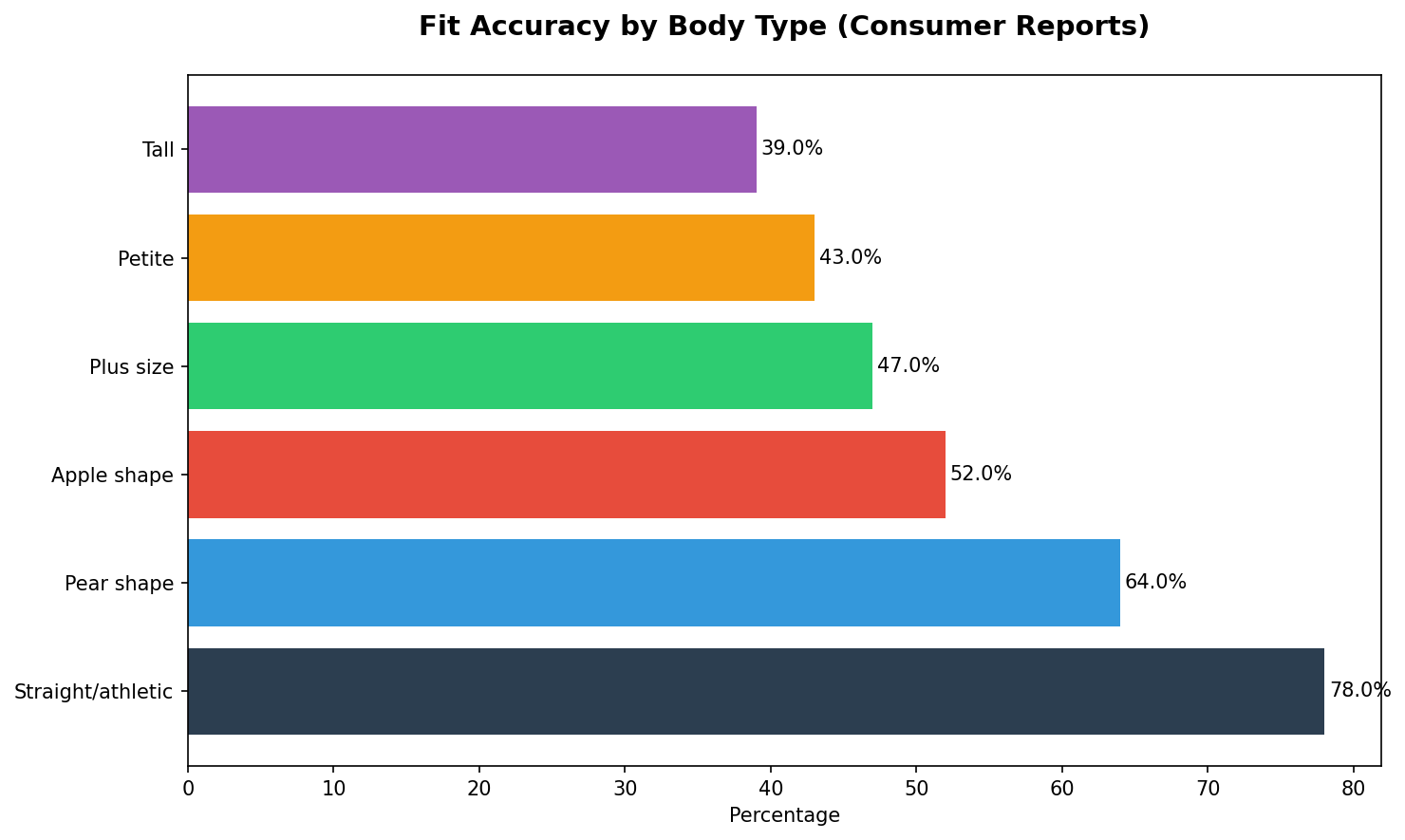
Most AI tools are trained on standard body types and sizes. If you're plus-size, petite, tall, or need specific fit accommodations, the AI might miss specialized retailers that cater to you.
Real example: An AI trained primarily on runway and editorial imagery will over-recommend slim, tailored fits. It won't know that Universal Standard offers extended sizing, or that Allbirds has shoes in wide widths, or that Old Navy's tall section is excellent.
How to avoid it: If you have specific fit needs, supplement AI recommendations with specialist retailers in your category.
Comparing the Options
Here's how the main approaches stack up:
| Tool Type | Real Inventory | Price Accuracy | Personalization | Speed | Shoppability |
|---|---|---|---|---|---|
| Pure Generative AI (ChatGPT, Claude) | No | Poor | High | Very Fast | No |
| Inventory-First AI (ComposedFit, The Outnet) | Yes | Excellent | Medium | Fast | Yes |
| Virtual Try-On (ASOS, H&M) | Yes | Excellent | Medium | Medium | Yes |
| Curation + Verification (Stitch Fix) | Yes | Excellent | Very High | Slow | Yes |
| Manual Search + AI Ideas | Yes | Excellent | High | Slow | Yes |
| Outfit Inspiration (Pinterest, Stylight) | Partial | Medium | Low | Very Fast | Partial |
The Path Forward
The best AI fashion tools recognize a simple truth: an outfit you can't buy is useless. This shifts the priority from "generate beautiful outfit possibilities" to "recommend the best outfits from what actually exists."
This is harder. It requires live catalog access, inventory verification, affiliate partnerships, and real-time price updates. Most AI startups skip these steps because they're expensive and complex. But if you're tired of falling in love with outfits you can't buy, these are the tools worth using.
When evaluating an AI fashion tool, ask three questions:
- Can I actually buy everything it recommends? Not "is it possible somewhere," but "can I complete a purchase in less than 5 minutes?"
- Are prices and inventory current? When was the last update? Is there a live inventory check?
- Does it link to real retailers? Affiliate links, direct shop links, or curated recommendations to specific stores?
If the answer to all three is yes, the tool is solving the real problem.
Closing Thoughts
AI is genuinely good at understanding style. It can read your taste, predict what works for your body, and suggest combinations you wouldn't have thought of. But AI hasn't solved the last-mile problem: turning those suggestions into actual purchases.
That gap—between "this outfit is perfect for you" and "here's where to buy it"—is where most AI fashion tools fail. The tools that succeed are the ones that start with inventory, not imagination. They recognize that the hardest part of fashion is not knowing what looks good; it's finding what looks good, fits you, and is actually available to buy today.
ComposedFit was built on this principle: every recommendation is grounded in real products from real stores with real current inventory. It's less about imagining perfect outfits and more about finding the actual best option from what's available. It's less aspirational and more useful.
If you've been frustrated by AI fashion tools that show you beautiful outfits you can't buy, there's a better way. Look for tools that verify availability before they make recommendations. Your time is too valuable to spend it falling in love with things that don't exist.
Find clothes that actually fit you
ComposedFit is an AI stylist that learns your fit and finds clothes that actually work — your budget, your size, your taste.
Try ComposedFit Free